Boss Accused Me of Bullying—So I Requested a Formal Punishment and Got the Last Laugh
In a strange turn of events at work, an employee who was accused of “bullying” by a new boss didn’t defend himself; instead, he asked HR to officially punish him. What happened next was a beautifully executed form of malicious compliance that showed how far managers had gone and led to justice that no one saw coming. The trouble started when a new team leader, who was known for micromanaging and acting condescending, called a simple question about something being clear out as bullying in front of the whole office.
The accused worker didn’t back down; instead, he told HR about the situation, including his union rep, and asked for punishment for his alleged “dangerous behaviour.” Because of the business move, HR had to officially look into what happened, but they found no bullying at all. Within a few weeks, the bad boss was quietly fired, and the worker was later thanked by higher-ups. This is a great example of how sarcasm and HR rules can totally ruin a corporate power trip.
The most satisfactory revenge is the one that toxic bosses receive for making life hell for normal employees

The poster’s new toxic boss asked the whole team to copy her in on every client email, as she wanted to improve the team’s performance

Communication, guidance, and professionalism are all important in the workplace. When bad leadership comes into play, though, even the most successful teams can feel the effects. One employee in this story used HR policies against her boss as a smart and planned way to get rid of a micromanaging boss who used HR policies as weapons.
In a job that required both tact and accuracy, the narrator worked in a semi-public sector job helping local companies. The team had a good name and was probably doing better than other teams in the area. But when a new manager from a different area started working, things changed. She cut her hours and seemed determined to change the team to fit her strict standards.
When leaders can’t be reached on important days, compressed hours, which are usually part of a flexible plan meant to improve work-life balance, can cause problems. Even though the boss was off every Friday, he or she wanted to be copied on all client emails so that answers could be approved. This clearly caused a problem with logistics: What do you do when you get texts from clients on Friday?

The worker asked this question in a reasonable and professional way during a team meeting. He wasn’t being rude or mean; he was just asking to be clear. But then there was a shocking response. The manager pulled him aside and told him he was bullying him. He also said that his questioning was not professional and that it might even be a reason to fire him. She told him to “be very careful,” which was a vague and threatening phrase that changed the situation right away from leading to abusing her power.
At that point, a lot of workers might have hid, felt guilty, or quietly updated their resumes. But this worker chose a different path: malicious compliance with a touch of business satire.
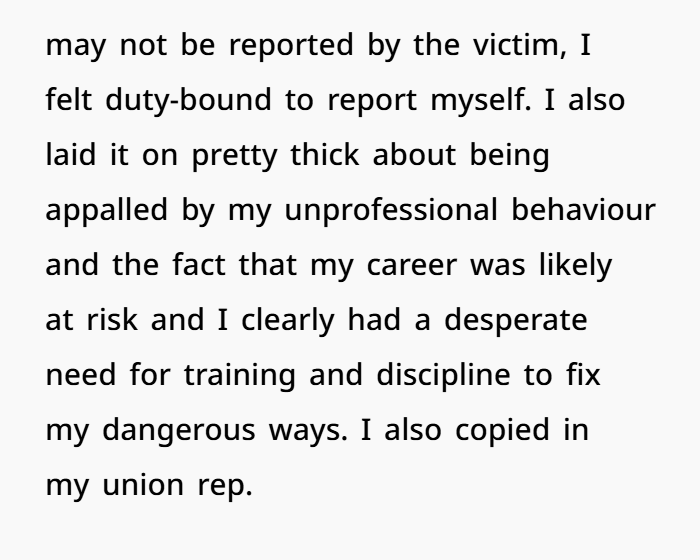
He wrote an in-depth email to the Head of HR that included his “bullying” question and explained everything that had happened. He even went one step further by exaggerating his own “unprofessionalism” to show how ridiculous the charge was. He even sent a copy to his union rep, making what could have been a private way to scare someone into signing into an official record.
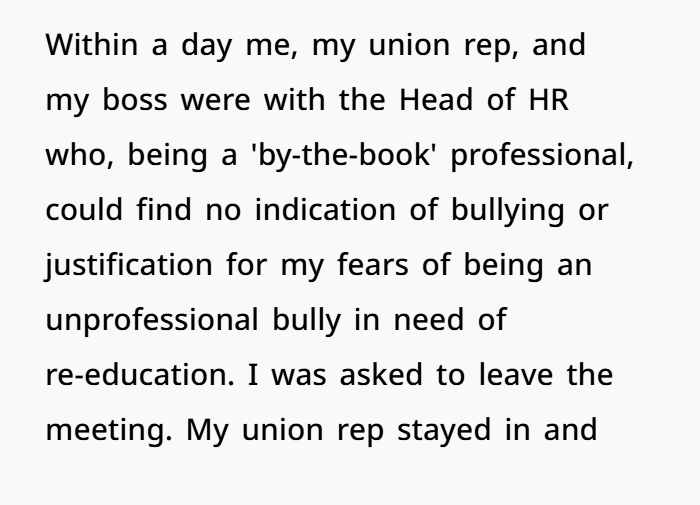
The clever part is that HR couldn’t just ignore the report. When an employee asks for official action or reports a possible HR violation, the company usually has to do something about it. SHRM says that complaints from employees, especially those that might be about a hostile work situation, should be carefully looked into.
As expected, the HR staff did not find any signs of bullying. The question was simple, and the fact that it happened in a team meeting made the accusation seem personal instead of business. The narrator was kicked out of the meeting after he gave his side of the story, but his union agent stayed and probably brought up the bigger problem: a manager who is making threats and creating tension for no reason.
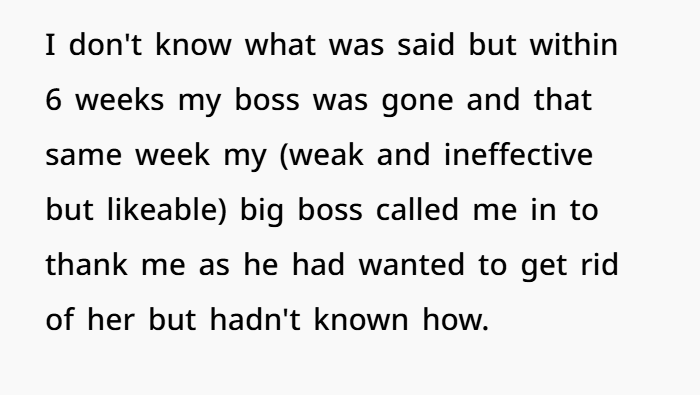
That boss was gone in six weeks.
It wasn’t a loud shot. It wasn’t in the news at work. However, it worked. This kind of quiet firing happens a lot in white-collar jobs where companies want to stay out of trouble but also know they have a problem. Harvard Business Review says that bad managers cause businesses to lose not only morale but also productivity, employees, and their good name.
The narrator’s plan worked because it addressed several areas of job stress:
Documentation: He took charge of the story by leaving a paper record.
Self-reporting: This changed the balance of power, making the company look at his actions instead of his boss’s charge.
Union involvement: Adding a third-party representative made sure the process stayed fair and that any threats of violence would be reported.

A lot of workers don’t realise how powerful HR strategy can be. HR isn’t always on the side of the employee, but it works in a system that cares about paperwork and how things look. It was impossible for the company to ignore the narrator’s worries because he was proactive instead of reactive. It was also impossible for the boss to keep going without being stopped.
What about that last surprise? His higher-level boss thanked him. Before, he didn’t have the power or the plan to get rid of the bad manager. That says it all. It shows how weak leadership is often hidden until a brave and smart person uses the system to reveal it.
This story resonates with anyone who’s been:
- Micromanaged at work
- Unfairly accused of misconduct
- Gaslighted by leadership
- Frustrated by HR silence
- Seeking smart revenge without breaking policy
It also shows the limits of corporations, the importance of worker rights, and the surprising power of humour at work. The worker didn’t yell. He didn’t make a complaint because he was mad. There were enough facts and a well-placed email to back them up.
This case is a reminder to workers who work in toxic settings that you don’t have to fight fire with fire. Sometimes, all you need is a clear record, some humour, and the right people copied on your email.