Teen’s Sweet 16 Gets Sabotaged by Her Mom and Best Friend—Then They Blame Her
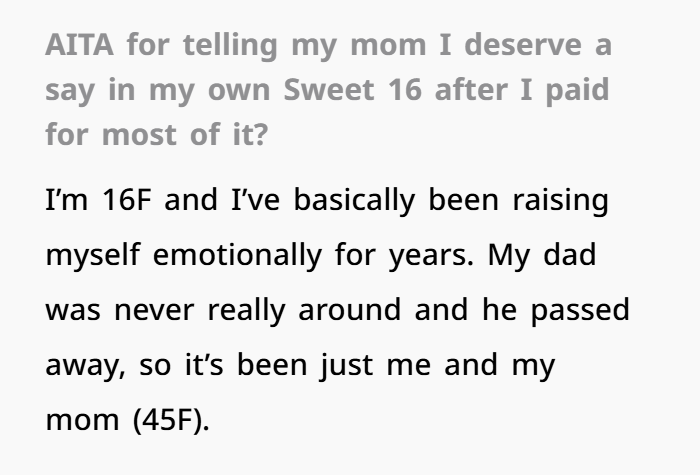
A 16-year-old girl has been dealing with an emotionally abusive home for years, depending on her own skills to stay stable. After working a job that didn’t pay well to save money, she helped plan and pay for her Sweet 16 party, which was a big cultural event that should have celebrated her growth. But right before the event, her mother and her mother’s bossy best friend agreed to cancel it all without telling anyone or talking about it.
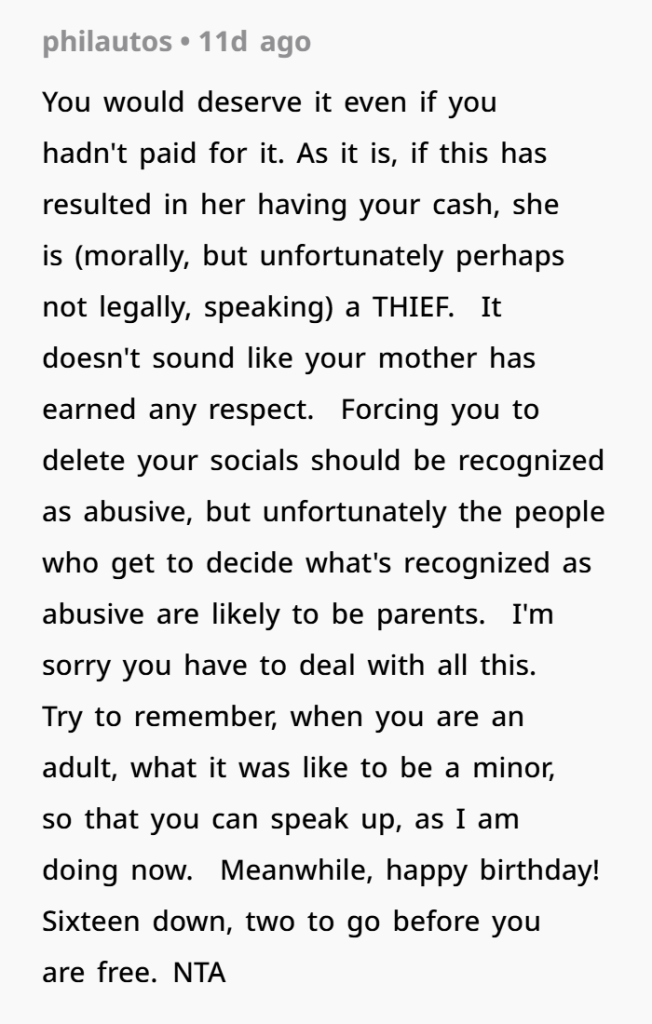
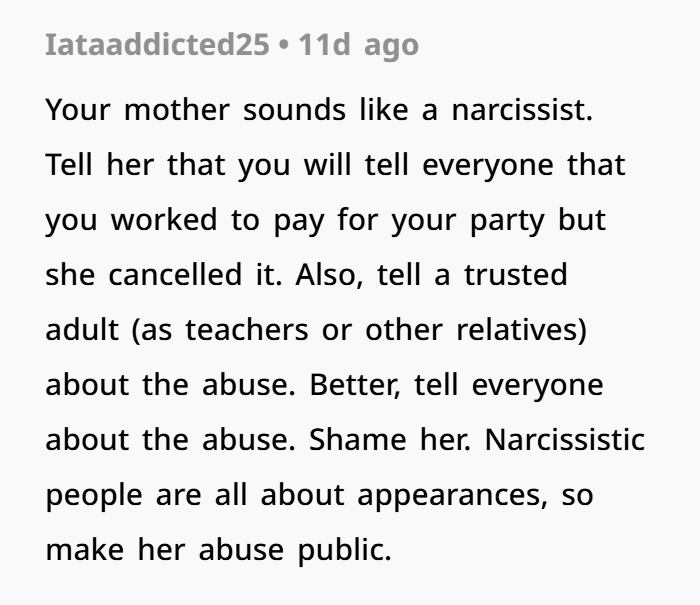
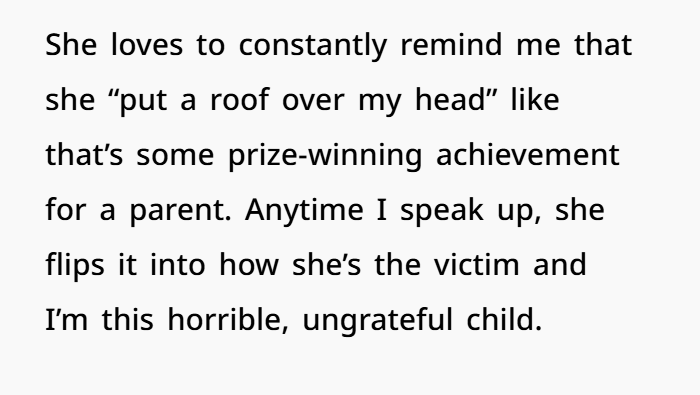
When the teen said she should have a say in a party she helped plan and pay for, her mother told her she wasn’t grateful, took away her phone rights, and said she had a “attitude.” Even though she wouldn’t let her get a licence or permit to officially work, her mother made fun of her for trying to plan her own future. Today, this girl is asking the internet if she’s really wrong or if she’s just sick of being punished for being strong and independent.
Many teenagers look forward to celebrating their 16th birthday

As did this girl, but unfortunately her mom cancelled it even though she paid for most of it
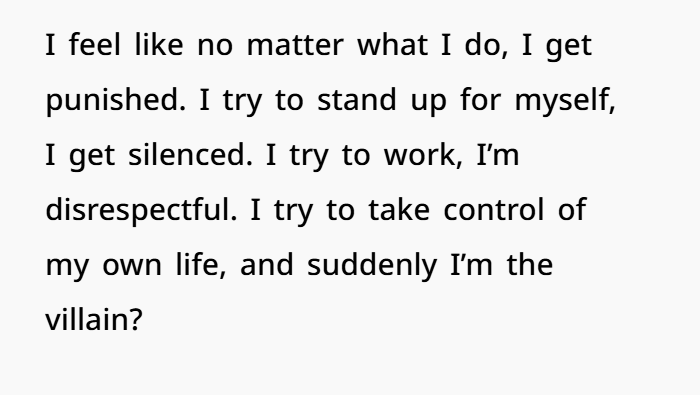
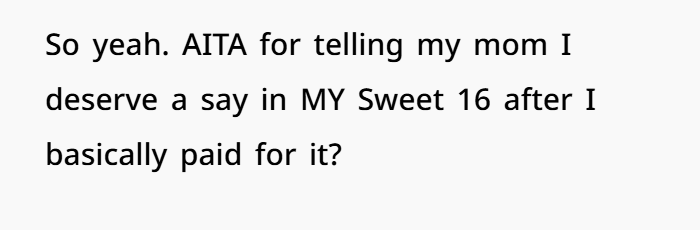
Celebrations of coming of age, like Sweet 16 parties, are more than just cake and dancing. They are cultural signs of growth, freedom, and identity. In many places, especially among Latino, Black, or immigrant families, these events mark the start of a young person’s adult life. But what happens when the person being honoured doesn’t have any say in the event?
In this story, the main character is a 16-year-old girl who has helped pay for and plan her own Sweet 16. In a world where most teens count on their parents to pay for their parties, she worked a secret job to pay for things like her dress and the venue. In teen success stories, this kind of early financial responsibility is often praised. But in this case, it was just another way for a controlling parent to keep control.
Why is it important? Child abuse and controlling others’ feelings. Instead of praising her daughter for taking the initiative, her mother cancelled the party without any talk, with the help of her best friend, who has been an enabler for a long time. This is a common example of forced control, which is when someone with power takes away someone else’s freedom. Psychology Today says that in this kind of relationship, the victim’s voice is often ignored, their efforts are downplayed, and being outspoken is seen as a sign of rebellion.
It’s not crazy for the kid to say, “I deserve a say.” In fact, anyone who contributes money should be able to have some say in decisions, no matter what age. But instead of being seen as grown or responsible, what she did was called defiance. It’s like how many kids who aren’t getting enough mental support feel like they can’t win no matter how hard they try. Healthline says that kids who live in these homes are often punished for trying to meet their own needs, so they grow up walking on eggshells.
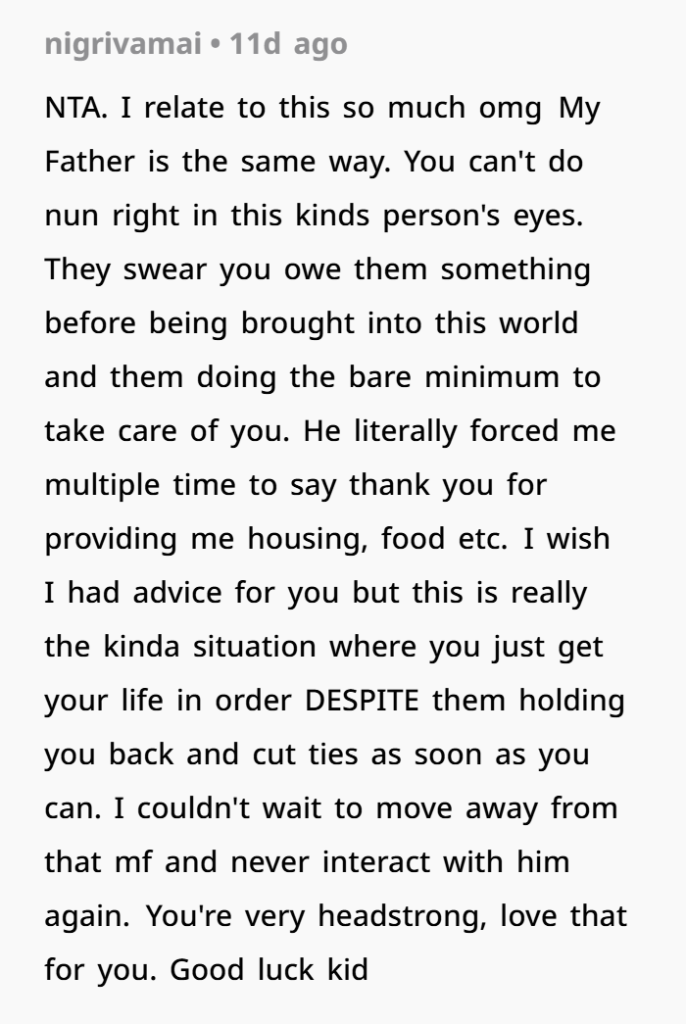
It’s even worse in this case because the mother is actively blocking her daughter’s way to independence. She was not given a work pass, was not helped in getting a driver’s license, and was not even allowed to go to job interviews, but she was told to “get a real job.” This is a harmful cycle that keeps happening. It’s a type of gatekeeping, where a parent keeps their child from getting to chances on purpose to stay in charge.
Even with these problems, the teen still found a way to save money and book an event. Her work is related to teaching teens about money, which is a popular topic in parenting and education groups and a high-paying keyword. In many homes, getting kids to work and save money is seen as a way to help them become responsible adults. But in places where parents are abusive, this effort is often seen as a threat instead of a good thing.
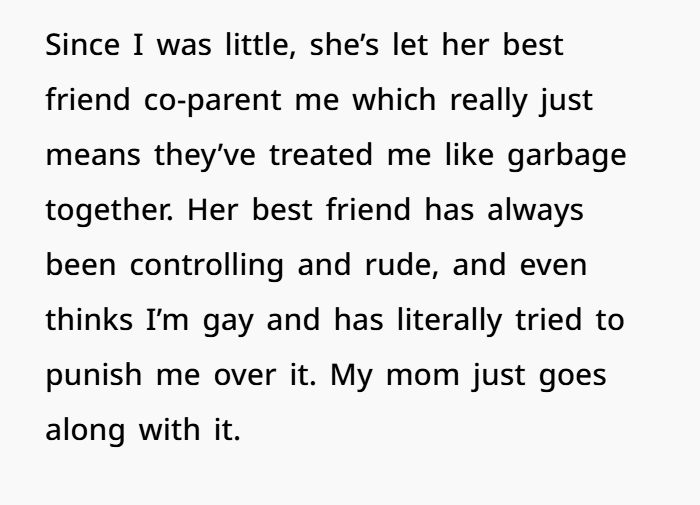
Not only does this young woman have to deal with a dominating parent, she also has to deal with a bad adult relationship. Her mother’s best friend has been involved in her raising in very bad ways. She has even tried to punish her because she was thought to be sexual, which is against her rights as a child. The Trevor Project says that LGBTQ+ teens and young adults who feel rejected or controlled at home are much more likely to have depressive, anxious, or suicidal ideas.
Instead of shielding her daughter from this mean behaviour, the mother encouraged it, maybe to take the focus off of the things she did wrong. Calling a child “ungrateful” is easier than having to think about years of mental neglect and a pattern of gaslighting. Parents who constantly see their basic responsibilities, like feeding and housing their children, as huge sacrifices are showing that they are emotionally immature and not good parents.
The girl is in even more pain because her mother doesn’t care that she is becoming more independent. It sounds like an insult to say that she wants to “raise yourself,” but she’s been doing it for years. And that’s the sad truth for many kids whose parents don’t care about them: they have to become emotionally mature a lot younger than their peers. Children lose their youth and are put into survival mode, according to the Child Mind Institute. This process, which is also known as “parentification,” can have long-lasting mental effects.

Is she a jerk for having a say in a party she pretty much paid for? Without a doubt not.
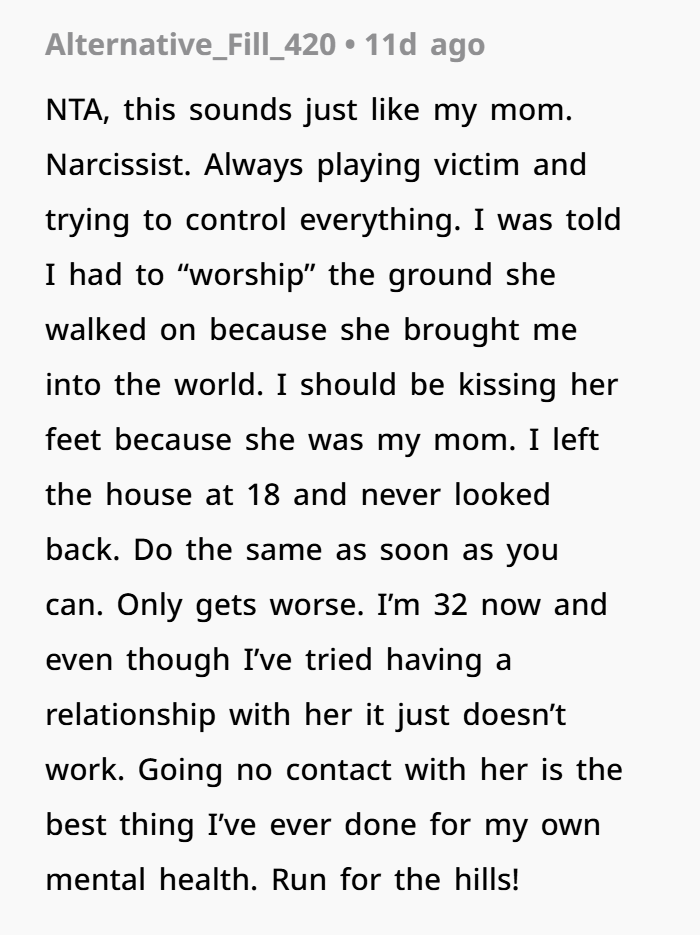
In fact, this case brings up bigger questions about teen freedom, unhealthy family relationships, and the long-term harm that comes from not listening to young people. Celebrations like a Sweet 16 are supposed to be happy and reassuring times of belonging, but in homes where control is a big deal, they turn into fights over who gets to be in charge and who gets punished.
Also, it’s important to think about the emotional cost of invalidation. When someone is told over and over that their actions, feelings, or worries are “too much” or “disrespectful,” they start to doubt themselves, try to please others, and get burned out. The Cleveland Clinic says that it can even lead to Complex PTSD or sadness in some people.
What then can be done? In a perfect world, parents would encourage their kids to be independent. But if they don’t, the best thing for a kid is to write down what happened, find support networks like trusted friends, school counsellors, or extended family, and make a long-term plan for how to get out and stay safe once they are an adult.
This girl is not ungrateful; she just needs more validation. She is not the bad guy in her story; she is already the hero for being able to stay alive in a place where staying alive is seen as resistance.