My Boss Was My Secret Santa—And He Gifted Me a Card… and Public Shame
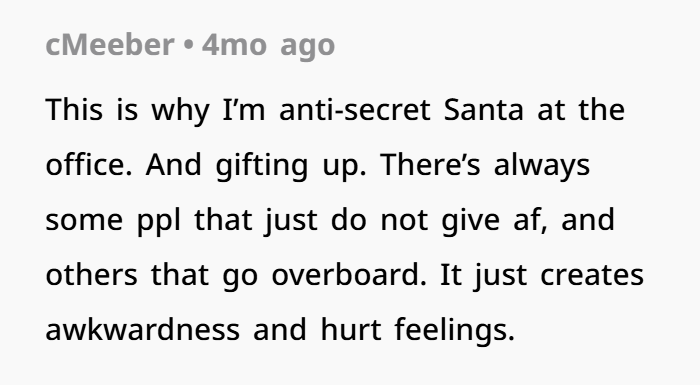
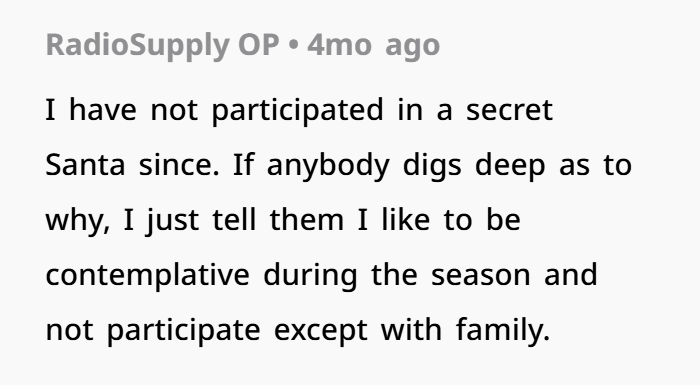
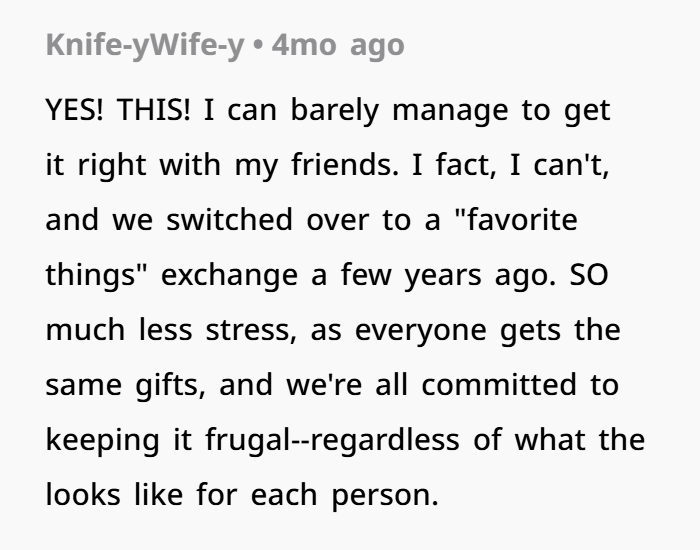
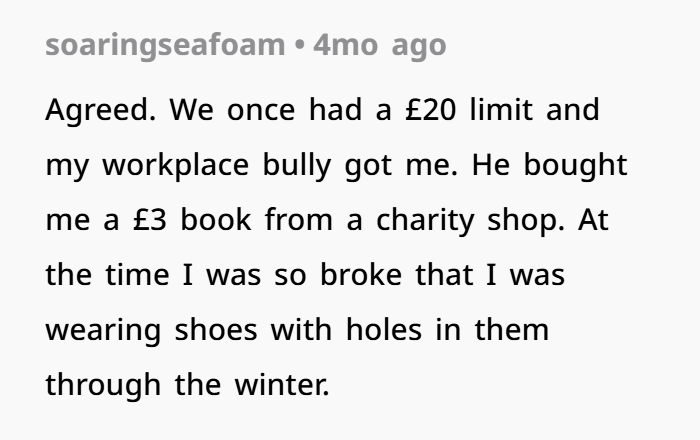
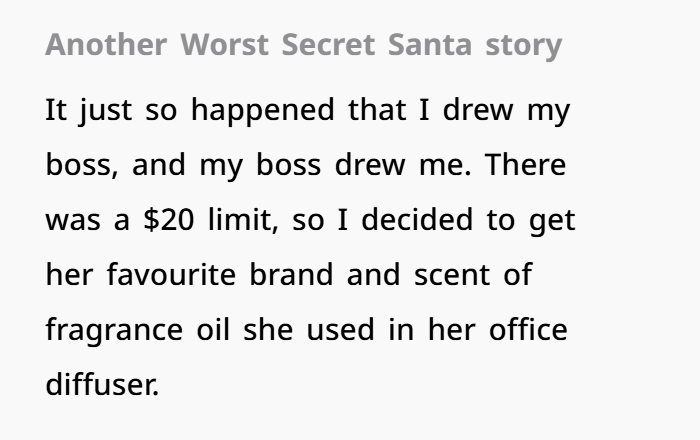
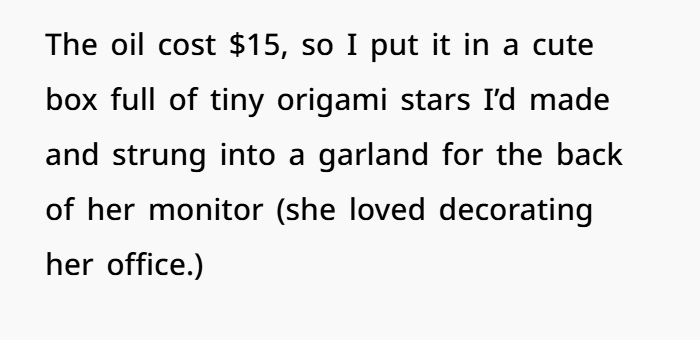
Secret Santa is meant to bring people together and get them in the holiday mood at work. But for one worker, it was a lesson in unfair treatment, bad leadership, and subtle shame at work. After getting her boss involved in the gift exchange, she really worked hard to make a thoughtful, personalised gift that was under $20: a favourite fragrance oil that was lovingly boxed up with paper star garlands that she made herself. What she got back wasn’t just disappointing; it was insulting.
Instead of a gift, her boss gave her a card with a mean joke about having to clean out the pantry. Some people laughed after that, but not many. The “gift” that was promised was actually a coffee bought with the company credit card during a ride-along. During the joke, her boss made fun of her even more instead of apologising. The emotional toll was quiet, and the memory stuck with her long after she got a new job and left the boss whose office was beautifully decorated thanks to the employee she had treated badly.
The holiday season can get hectic at the office

And for this worker, a gift exchange with their boss only added to their stress
When Workplace Traditions Turn Toxic—A Closer Look at Secret Santa Gone Wrong
The story you told is more than just a disappointing Secret Santa experience. It shows bigger problems with workplace culture, power relationships, and the emotional work that employees do to make the workplace a good place to be. Let’s talk about what these kinds of incidents mean in a wider sense and how businesses can handle these tough situations better.
The Power Dynamics of Gift Exchanges
Gift exchanges at work, like Secret Santa, are meant to bring people together and get people in the holiday mood. But if they aren’t handled well, they can make existing hierarchies worse and make people feel left out or angry. The imbalance is clear: an employee spends time, thought, and personal money on a gift for their boss, but in return, they get a note of dismissal and a job.

These kinds of situations show how important it is to have clear rules for exchanging gifts at work. Employers should set spending limits, make sure that participation is voluntary, and support thoughtful gifts that are open to everyone. HR experts say that employers should think about sending their workers a written reminder or letter explaining what is expected of them in terms of gifts and behaviour.
Emotional Work and Its Effects
Don’t forget how hard these kinds of events can be on your emotions. People often do things that aren’t part of their job titles to make the workplace a better place to be. When these attempts are ignored or made fun of, it can make people feel worthless and cause them to burn out.
According to research, emotional labour, which means controlling your feelings to do the emotional parts of your job, can have big effects on your mental health. When workers feel like their work isn’t valued or appreciated, it can make them less satisfied with their job and more likely to quit.
What HR should do and be responsible for
Human Resources departments are very important in these kinds of scenarios. When an employee complains about how people engage at work, HR needs to deal with it quickly and effectively. In this case, HR should have followed up on the problem after recognising it, but they didn’t. This is a missed chance to reinforce a culture of respect and responsibility.
Policies at work should make it clear how to handle complaints so that all employees feel like they are being heard and respected. Staff can also be given the tools they need to handle complicated social situations by getting regular training on how to communicate with others and be welcoming.
🚦 The More General Effects
This event is a microcosm of bigger problems with the way organisations are set up. It makes you think about how traditions at work can keep unfair situations going and hurt trust if they are not handled well. Employers need to understand how small interactions can have a big effect on staff morale over time.

Organisations can change the culture of the workplace by creating a space where respect, empathy, and open conversation are valued. This means that leaders at all levels must not only make rules, but also show others how to behave in a certain way.