MIL Shames Pregnant DIL for ‘Neglecting’ Toddler — Gets Shut Down by Her Own Son
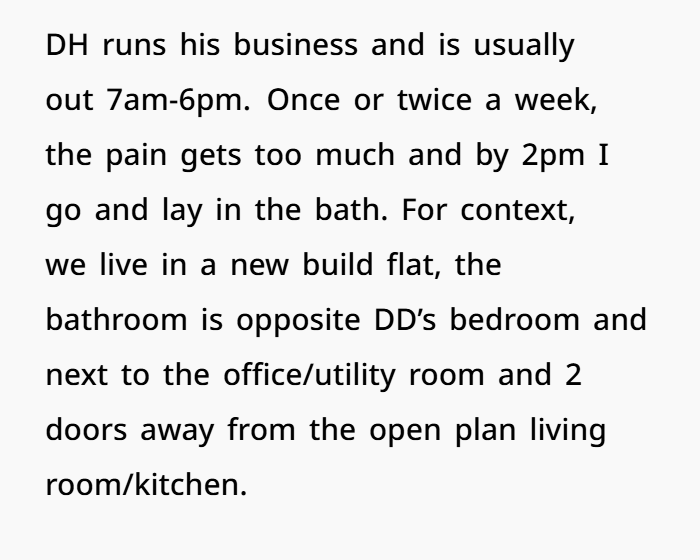
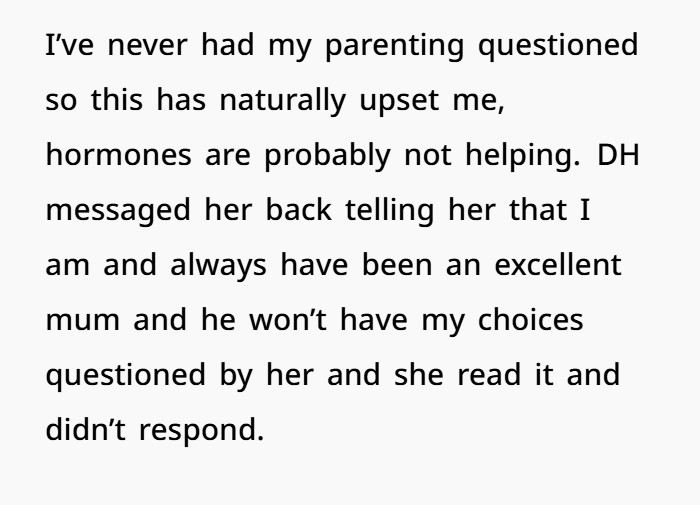
A heavily pregnant mother of a two-year-old started a huge debate online when she talked about how she deals with the pain of her pregnancy by taking a 30-minute bath once or twice a week. With safety measures in place, like locked doors, medicine cabinets and Peppa Pig on the TV, she felt good about letting her baby play alone in their safe apartment. But her mother-in-law called the process “neglectful,” which has made her feel bad and make her question whether she’s doing the right thing.
This post talks about the emotional line that modern moms walk, having to deal with pain, being a parent, and people’s judgements without asking for them. It has something to do with the idea that moms should always be there for their kids, even if they are physically hurting. Is taking 30 minutes off really carelessness, or is it something you have to do to stay alive?

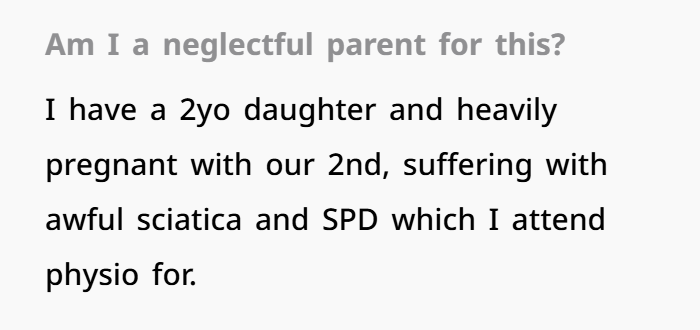


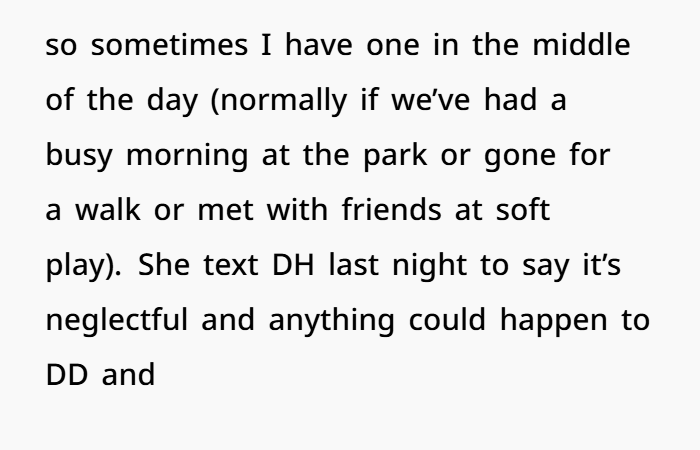
With more than 150 replies, the original post starts with a scene that many pregnant women can relate to: constant pain, physical limitations, and the need for a moment of relief. The poster is very far along in her second pregnancy and is having a hard time with sciatica and symphysis pubis dysfunction (SPD). These are both common but painful pregnancy illnesses. According to the NHS, SPD can make even simple movements painful. A warm bath is one of the few safe and suggested ways to ease symptoms.
In this case, the mom makes sure the bathroom is safe before getting in. Her 2-year-old daughter can only go to safe, child-proofed parts of the flat where all the dangerous things are locked up or out of reach. The child has water, something to do, and the freedom to play in the living room or go into the bathroom to be with mum. The front door is locked, and the medications are kept in a locked container.

From the point of view of child safety, this set-up works great. Child development experts say that kids around the age of two do best when they are allowed to be independent while being watched. In this case, the parent isn’t directly involved all the time, but she’s always within hearing distance, and the child often checks in.
Where does the claim of indifference come from, then?
The MIL’s Response: A Reflection of What People Expect
The situation got worse when the mother-in-law (MIL) found out about the noon bath and said the mom was not taking care of her. Older groups often have a stricter view of raising children because of the way they were raised and the examples they have seen. In some homes, being a “good mom” still means being close to the kids all the time and giving up things for them, even if it hurts the mom’s health.
The most hurtful thing about the claim is not that it was made, but that it was sent as a text message to the poster’s husband instead of in person. Going around the mom to the dad is a common sign that there are boundary problems in in-law relationships. Instead of bringing up a worry out of kindness or interest, the MIL turned it into a weapon by calling it neglect without giving any background or nuance.
The husband thankfully reacted with strong support, standing up for his wife and reminding his mother that no one should question how she is parenting. Still, the damage was done; the person who wrote the post felt bad about herself and turned to the Mumsnet group for support.
Do You Really Need 30 Minutes in the Bath?
To get to the point of the question: is this really bad parenting?
Child welfare groups like the NSPCC say that neglect is when a child’s basic needs are not met, like food, shelter, medical care, supervision, or mental support. In this case, a mom sitting in the tub with the door open and her child just steps away is not meeting her needs or making sure she is safe.
In fact, a lot of parenting experts support the idea of “good enough” parenting, which says that ideal is impossible and not needed. Parents can take breaks as long as their kids are safe, fed, mentally supported, and loved. This is especially true when they are sick.
Also, showing a two-year-old how to play alone while a parent is nearby but not directly involved is a very important developmental step. Zero to Three says that children at this age start to understand limits, follow routines, and learn how to control their behaviour. Short periods of independent play help with all of these things.
The real problem is mum guilt and the stress of always being available.
This post really shows how deeply mum guilt can go, even if the parent is doing all the right things. It comes from harmful cultural norms that expect moms to be always there, always giving, and emotionally strong that women shouldn’t take a short bath to ease their pain, even when they are physically in a lot of pain.

The sign isn’t going to leave her kid alone in a park. Making a structured, safe place and showing how to take care of herself when she’s stressed. That’s not carelessness. That’s sensible, all-around parenting.
The responses on Mumsnet showed that people understood this. Most of the people who commented told her she was doing the right thing, had similar experiences, and thought the MIL was wrong to judge her. Some people even reminded her that what she was doing wasn’t just okay; it was important for her to stay alive because of the physical demands of being late in her pregnancy.